The Future Economy Has a Water Problem: The Next Great Innovation Race Might Be About Water
The rapid growth of AI has created enormous demand for data centres.
Most commentary focuses on power consumption.
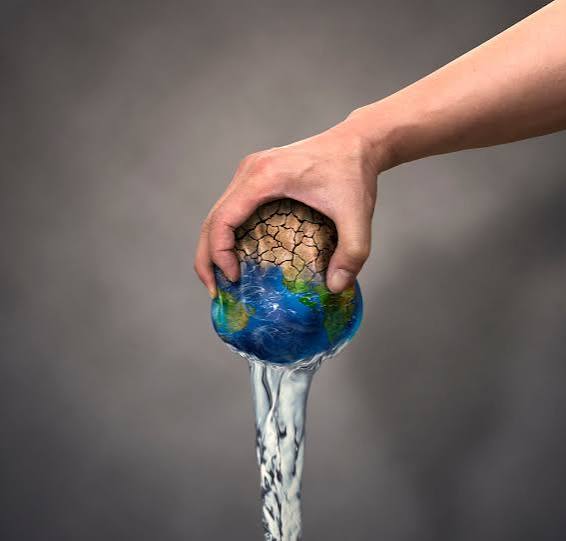
But increasingly, another challenge is emerging: water.
As demand for digital infrastructure grows, so too does the need for cooling technologies capable of managing ever greater processing power. Recent concerns around whether the UK can support future data centre expansion without significantly increasing water capacity highlight a challenge that is already beginning to emerge globally.
And data centres are not alone.
Across agriculture, chemical manufacturing, critical minerals extraction, battery materials production and advanced materials processing, industries are finding themselves competing for the same finite resource.
That is why I increasingly believe water may become one of the defining innovation challenges of the next decade.
Economic Growth Meets Resource Constraints
What makes this challenge particularly interesting is that many of the sectors expected to drive future economic growth are also highly dependent on water.
Data centres need cooling.
Agriculture relies on irrigation.
Chemical processing requires water across countless operations.
Battery materials and critical minerals production often depend on substantial volumes of water for extraction, separation and refining.
Individually, these demands are manageable.
Collectively, they create increasing pressure on resources that many industries have historically taken for granted.
The result is a growing demand for innovation.
Innovation Is Happening Everywhere
One of the fascinating aspects of this challenge is that organisations are approaching it from completely different directions.
In agriculture, companies are developing superabsorbent polymers, soil additives and water-retention technologies designed to improve crop productivity while reducing water consumption.
In data centres, operators are investing heavily in liquid cooling, closed-loop systems, heat recovery technologies and new approaches that reduce reliance on traditional cooling methods.
In industrial processing, organisations are exploring water recycling, recovery and reuse strategies that can significantly reduce overall consumption.
While the applications differ, the objective remains remarkably similar:
Achieve more with less water.
Innovation Beyond the Mine
A recent article discussing lithium and battery materials highlighted an important reality.
The greatest future constraint may not always be access to the resource itself.
In some cases, it could be access to the water required to extract and process it.
That observation has implications far beyond critical minerals.
It highlights a broader industrial trend.
The next wave of competitiveness will not simply come from securing resources.
It will come from using resources more efficiently.
Whether that means developing water-efficient extraction technologies, improving recovery rates, reducing waste streams, redesigning industrial processes or creating new cooling technologies altogether, innovation will increasingly be driven by resource constraints rather than abundance.
Why This Matters
Too often we treat sustainability and commercial performance as separate conversations.
Increasingly, they are becoming the same conversation.
Reducing water usage can improve operating costs, strengthen resilience, reduce regulatory risk and help organisations secure long-term growth.
In many cases, the companies developing the smartest water solutions are also building the strongest competitive advantage.
Why This Interests Me
I am not a water specialist.
But throughout my career I've worked with the people responsible for solving complex industrial challenges.
Chemical engineers.
Process engineers.
Materials scientists.
Operations leaders.
Technical innovators.
The common thread running through so many growth sectors today is not simply access to raw materials, infrastructure or capital.
It's the ability to innovate around constraints.
Water is becoming one of those constraints.
And whenever a constraint emerges, innovation follows.
The companies that thrive won't necessarily be the ones with the greatest access to resources.
They'll be the ones that find smarter ways to use them.